
 Ladungssicherung


 Industrie & Logistik


 Planen & Netze


 Urlaub & Freizeit


Replacement of tensioning and lashing straps
Lesezeit: 3 minutes
Aktualisiert am: 21.07.2025
-
Lashing straps must be checked regularly for defects to ensure their safety and usability.
Fachtexte von
Ladungssicherungs-Profis
When to replace tensioning and lashing straps – Assessment criteria
Tensioning and lashing straps are a very popular means of securing loads in lorries. That is why they are used in almost every load securing process. However, lashing straps also wear out. That is why they need to be replaced over time. However, it is difficult to make an accurate statement about the specific durability of the straps, as this depends heavily on the quality of the straps on the one hand and on their respective use on the other. As a general rule, you have to spend more money on high quality, but these high-quality straps can then be used much more often. There is no specified expiry date. Therefore, you must carefully check the straps to see if they are ready to be discarded. To assess whether the straps are suitable for transport, they must be checked for defects before each use.
Here you will find the ultimate check to assess whether a tensioning strap is ready for replacement: Defects in the webbing
- Cuts or yarn breaks of more than 10 per cent of the tape cross-section
- Edge cuts and indentations
- Cuts across the entire width of the belt
- Damaged seams or damage to other connecting elements
- Heat-induced deformation of the webbing
- Damage caused by aggressive substances such as chemicals
- Missing/unreadable licence plate label
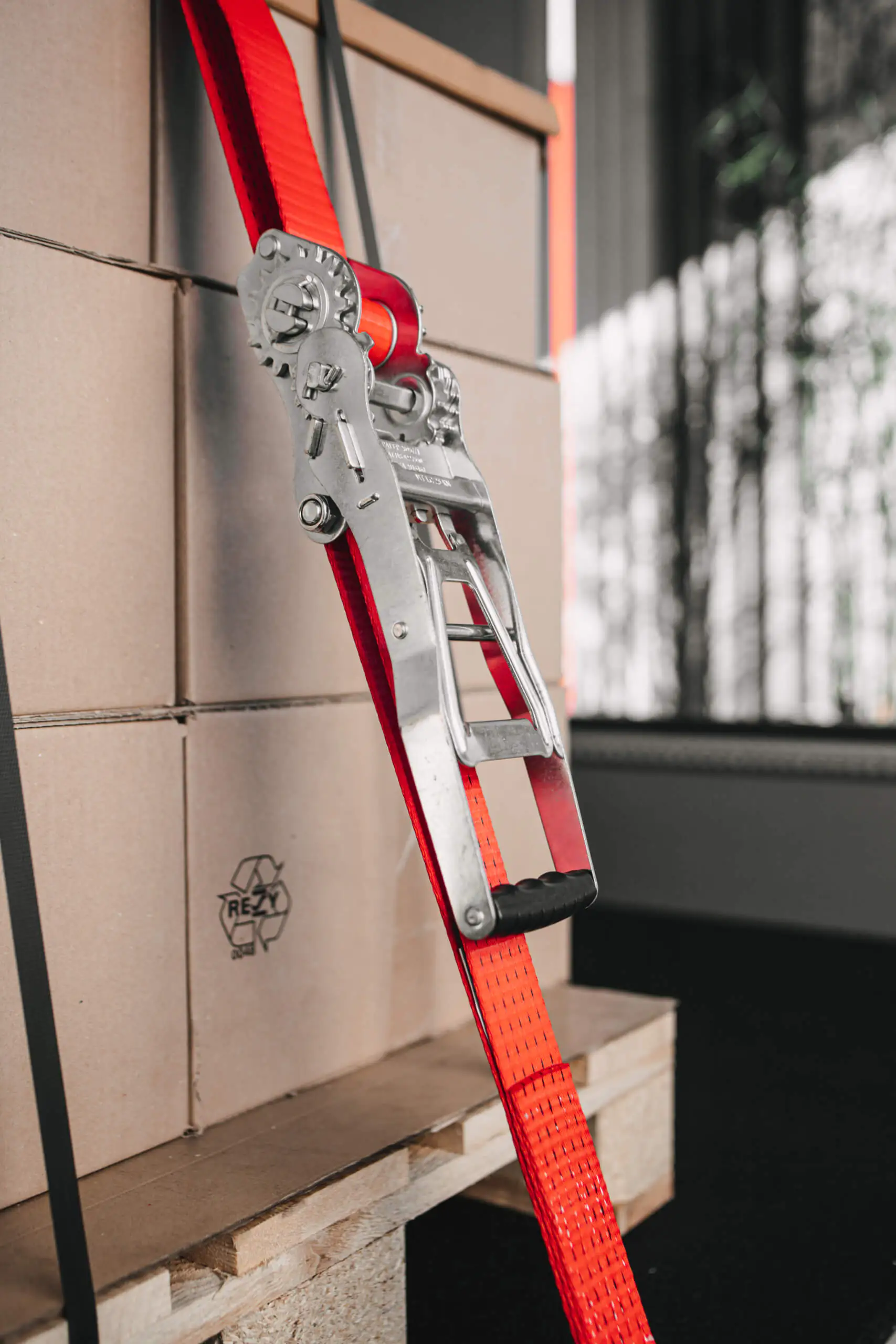
Defects in the tensioning element (ratchet)
- Breaks or cracks in the tensioning element
- A deformed splined shaft (in lashing strap ratchets)
- Other deformities that impair function
- Severe corrosion of the clamping element, impairing its function
Defects in the connecting element (hook)
- Breaks or cracks in the connecting element
- An expansion of the hook mouth exceeding 5 per cent
- Further severe deformation of the connecting element
- Severe corrosion of the connecting element, impairing its function
The lashing straps may no longer be used if at least one of the above criteria applies. If you are stopped for inspection with a lashing strap that is ready for disposal, you may even face a fine because the load is not adequately secured. A lashing strap that is ready to be discarded may be considered by an inspector to be a non-existent tensioning strap. Lashing straps not only secure your transport, but also make our roads safer. Have a good journey!
Why can tension belts and lashing straps only be used until they are ready for disposal?
It is well known that tension belts are among the most important aids for securing loads. Although they are generally characterised by an extremely long service life, they are of course not indestructible. They must therefore be carefully checked before each use so that they can be replaced if they are defective or damaged. But what does this ripeness actually mean? Do they indicate precise signs of wear, or are they more like general recommendations? We will get to the bottom of this question.

The maturity of offshoots in load securing
Although tensioning straps and lashing straps do not have a fixed expiry date, there are some reliable indicators that show that the straps no longer meet the required quality standards. Let's start with the webbing: if there are cuts of ten per cent or more on the selvedge, it must no longer be used. The same applies to excessive wear caused, for example, by broken threads. If damage is visible at the seams or if the straps have been deformed by heat, they must also be replaced immediately. Occasionally, the tapes may accidentally come into contact with aggressive materials. The tissue damage caused by this poses a safety risk, rendering the tape unusable and ready for disposal. Employees must also pay close attention when checking the ratchets. If the tensioning lever is broken or the tensioning element on the slotted shaft of the transport slide is deformed, the entire belt is unusable. Also check all connecting elements and hooks. A broken hook or so-called widening is usually an equally sure sign that the plant is ready for harvesting. Such tension belts and lashing straps must not be used under any circumstances! By the way: if a belt is missing its label, or if it is damaged or illegible, this is another sure sign that it is ready to be discarded. Even if you want to transport a motorbike with tension belts, the same criteria for readiness for removal apply as usual.
Can lashing straps and tensioning straps be repaired?
Belts must not be knotted under any circumstances, even if they are still intact and only need to be lengthened. If the belt is damaged, any repairs must be carried out by qualified personnel with the appropriate skills and knowledge. As a rule, only the manufacturer can carry out such repairs; for safety reasons, you should never attempt to repair the device yourself. Mechanical influences such as riveting or even screw connections are of course also inadmissible. All belts must undergo a professional inspection at least once a year. This task is performed by an expert, who also documents the inspection and its results at the same time. If there are any doubts about the quality of the tensioning straps and lashing straps, they must be taken out of service immediately. Find out more about other load securing aids in our online shop!