
 Ladungssicherung


 Industrie & Logistik


 Planen & Netze


 Urlaub & Freizeit


Possible applications
Lesezeit: 4 Minutes
Aktualisiert am: 22.07.2025
-
Useful for securing luggage in a car
-
Frequent use of nets in parcel services
-
Also used for small-scale transport and heavy-duty applications
Fachtexte von
Ladungssicherungs-Profis
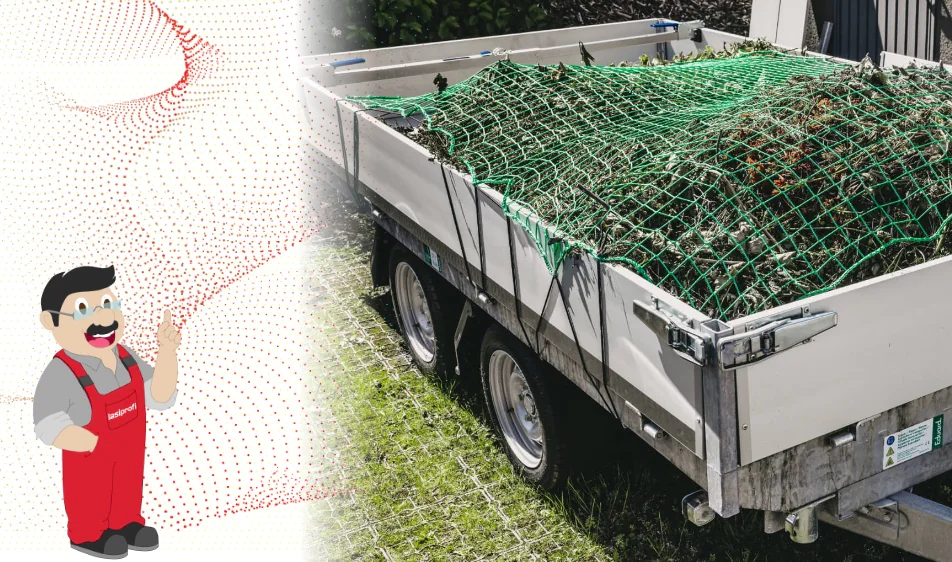
Possible uses of load securing nets in road transport
When talking about load securing, most people only think of lorries and the loads stored in them for transport. However, load securing also starts on a small scale.
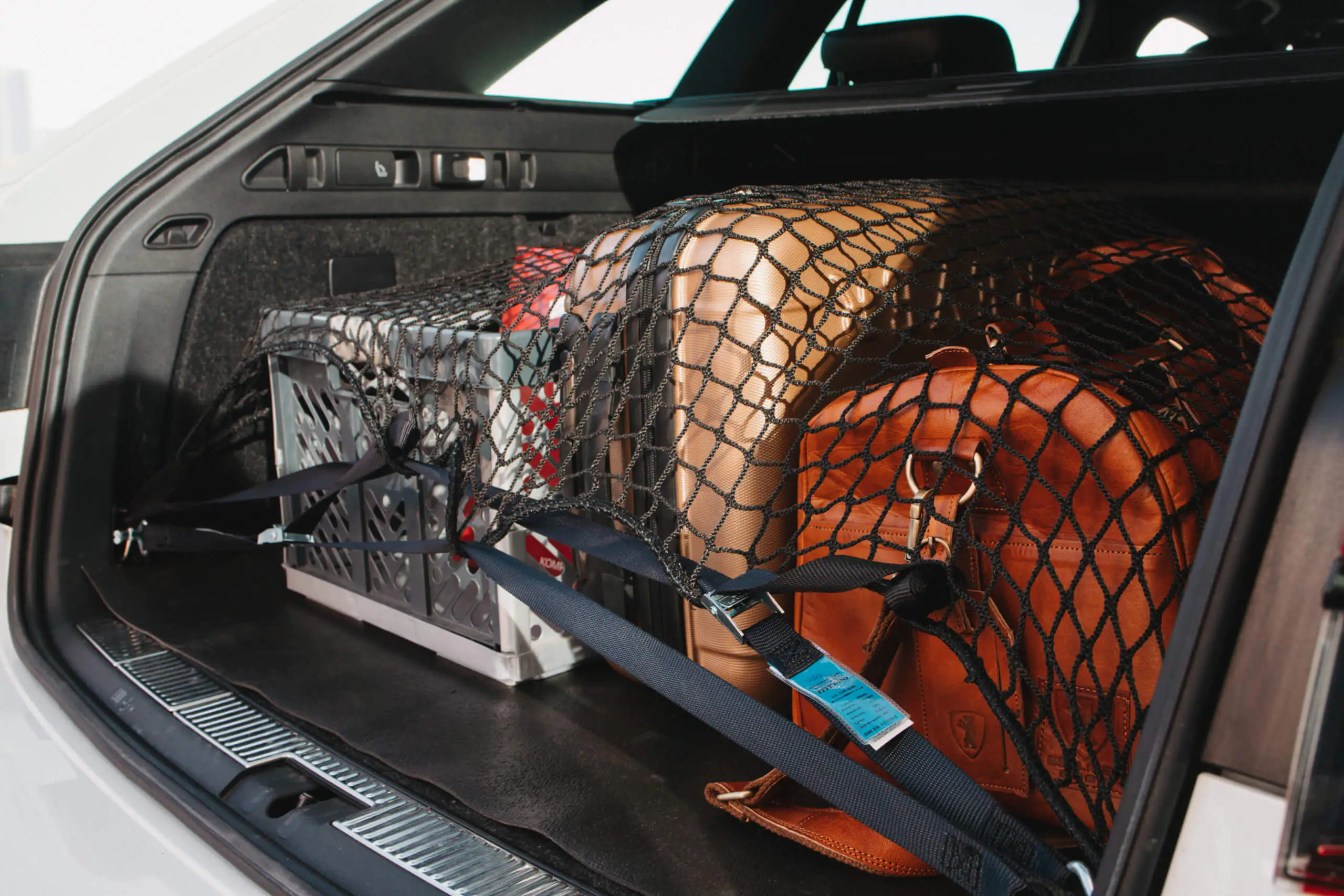
This is therefore also an issue for every ordinary citizen who sets off on holiday in their car, for example. Often, the luggage needed for the holiday is simply stowed in the boot of the vehicle. Nobody thinks about load securing at this point. Yet this is precisely where there is a major hazard that is underestimated by many. This is particularly true for the so-called space wonders among cars – vans and minivans. In the event of emergency braking, loose luggage can fly through the entire interior and end up in the front with the driver. It would be so easy to prevent this by simply using a load securing net. Fabric tarpaulins are also often used for load securing. Such a load securing net is usually made of flexible and extremely tear-resistant plastic fabric and can be used for lashing down loads, especially in small areas such as cars, but can also be used to partition off and secure the interior both at the front and rear. Equipped with such a securing device, you can set off on your holiday with complete peace of mind. You just have to make sure that you use and attach the securing net correctly to ensure effective protection.
What is useful in the private sphere cannot be bad for the commercial sector. Of course, there are also suitable nets for securing loads for daily use in transport vehicles. These nets are often used by parcel services. Here, loose boxes are usually transported, which cannot be easily secured with a strap or anti-slip mats. These nets were developed precisely for such special cases, so that even such loads can be secured effectively and danger to others can be avoided as far as possible. But load securing nets are also used in large lorries. Here, too, parcel services are often the beneficiaries, as they have to transport individual shipments from one transhipment warehouse to another. Appropriate nets are also used to secure the load in containers when loading sea containers, which are then transported by lorry to the port. If nets with particularly small meshes are used, they can be used to cover open loading areas. This prevents the load on the loading area from being accidentally scattered on the road during the journey. This also makes it more difficult for unauthorised persons to access the loading area, thus ensuring protection in this respect as well.
What should be considered when using load securing nets?
Anyone who looks into the subject of load securing will quickly realise that this topic actually concerns everyone who travels by vehicle. This topic becomes relevant even when you simply stow your shopping in the boot of your car and then drive home from the supermarket.
After all, Section 22 of the Road Traffic Regulations (StVO) does not only refer to commercial transport. It merely states that everyone must stow and secure any existing load appropriately so that it does not slip or fall over in the event of emergency braking or sudden steering movements, and that avoidable noise must not be caused. This regulation applies to all road users, including private individuals who simply want to take their shopping home. But how can you secure a load in a car in a way that is not only effective but also complies with legal requirements?
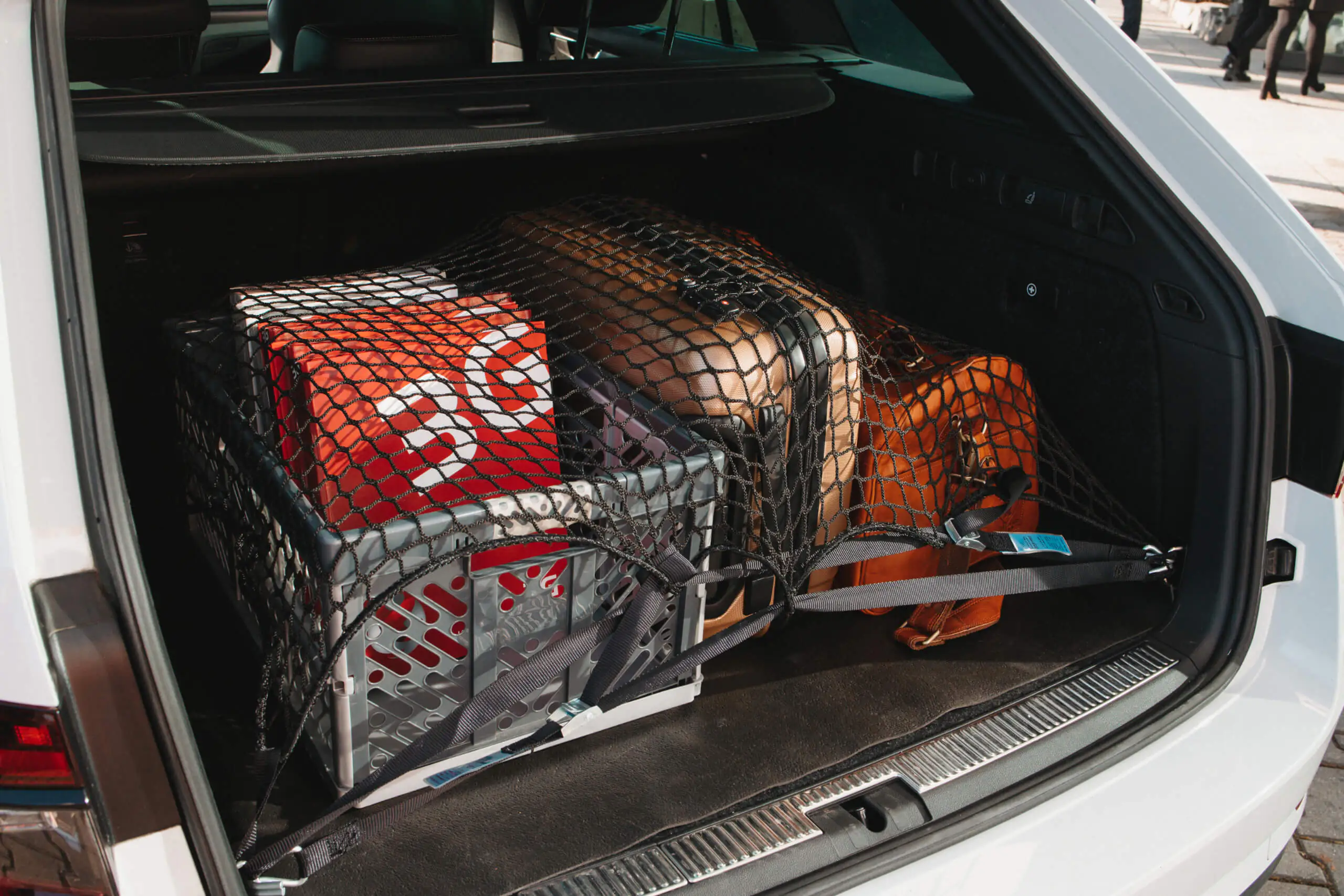
Load securing nets are generally used here. Such nets – sometimes referred to as luggage spiders in the car sector – are designed to prevent the load from becoming loose in the situations described above and thus posing a hazard. Anyone who decides to use a load securing net should definitely bear a few important things in mind to ensure that the net can actually perform its load securing function. First of all, you should make sure that the net is made of a material that is not only robust but also flexible. This is the only way to ensure that, in extreme cases, the load is not only secured against slipping but also protected from damage. Depending on the area in which you want to use a load securing net, it is also important to consider whether a close-meshed or coarse-meshed net is required. After all, it makes little sense to use a net with large meshes to secure a load consisting of small parts. In the commercial sector, such nets are mostly used in small vans. However, there are also nets that have been specially developed for heavy-duty applications. These are always used when other load securing aids – such as lashing straps – are unsuitable. This is very often the case with containers, which are usually loaded with general cargo. In most cases, there is no way to secure the load effectively without using a load securing net, as form-fitting loading is usually not possible. However, a net can also be used to separate or even divide the load compartment. This makes it possible to remove cargo from one part of the load compartment without having to remove the securing devices from the other part.
