
 Ladungssicherung


 Industrie & Logistik


 Planen & Netze


 Urlaub & Freizeit


Vehicle protection with rubber buffers
Lesezeit: 9 Minutes
Aktualisiert am: 12.08.2025
-
Take technical safety measures - Install ram protection
-
Buffering is an important element in protecting staff
-
Pay particular attention to quality
Fachtexte von
Ladungssicherungs-Profis
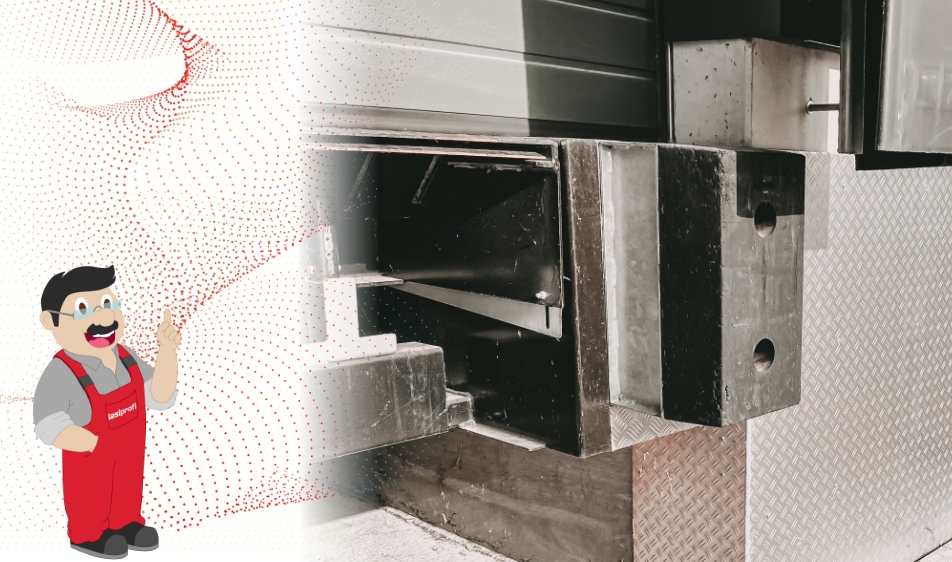
Safety in the loading area thanks to rubber buffers
Accidents and breakdowns in the loading area often have serious consequences. Not only do they cause significant material damage, but in the worst case, people can also be injured. It is not uncommon for such accidents to be fatal. An above-average number of accidents occur during loading and unloading times in particular. One reason for this is certainly the rush that prevails at loading ramps, as the goods are needed quickly and the lorry must be available again for transport as soon as possible. The annual damage to buildings and vehicles is also enormous. It is therefore particularly important to take special technical safety measures throughout the entire loading area of a factory and to install appropriate impact protection. Buffering is an important element in securing the loading zone. Here, bumpers are installed directly at the docking points of the ramp. These bumpers serve to absorb shocks between the loading ramp and the vehicle during the docking process and prevent damage. When optimally designed, buffering during docking is also a very important element in protecting personnel. It prevents an employee on the loading ramp from being trapped between the building and the vehicle. However, when choosing a buffer, it is important to carefully check the materials to ensure that buildings and lorries are protected from damage in the long term. After all, the buffer often has to absorb enormous forces during docking. Experts believe that rubber buffers alone are insufficient, especially for loading ramps that are used frequently, as rubber does not have any damping properties. For example, buffers made of polyurethane, PVC plastic or, even better, spring steel buffers are more durable in use. Spring steel buffers are characterised by excellent damping properties with minimal wear. Especially in the case of heavy-duty loading, they better protect the building structure from cracks that can occur due to the energy released. Standard impact buffers are made of solid rubber, polyurethane, spring steel or PVC plastic, usually with a steel screw-on plate, and are available in all standard gate sizes. It is also advisable to install an adjustable buffer that can be perfectly adapted to the height of the bumper of any vehicle. Spring steel docking buffers can be individually adjusted in terms of their damping properties. In the meantime, collision buffers have even been developed that are able to detect the docking vehicle by means of an integrated sensor. The sensor measures the distance between the lorry and the ramp and signals to the driver via a traffic light system with green, yellow and then red when he has docked optimally. By investing in suitable docking buffers, companies can significantly reduce repair and renovation costs. Docking buffers help to prevent damage to vehicles and buildings and play an important role in protecting employees in the loading bay area.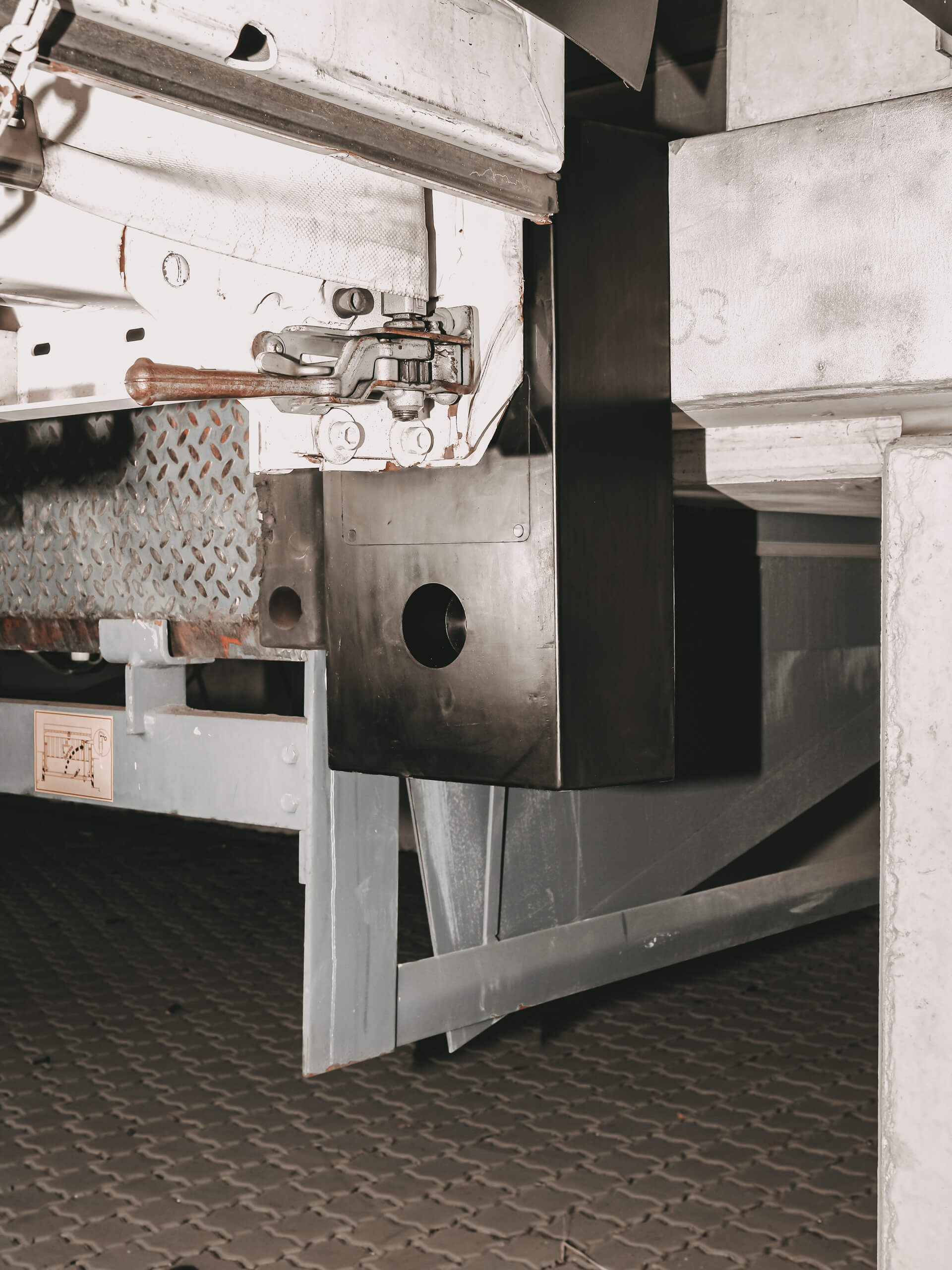
Ramp buffer to protect against damage during loading and unloading
A ram buffer is designed to absorb the forces of a heavy vehicle in order to prevent damage to buildings and vehicles. They can be installed on ramps, for example, for loading and unloading trailers. Truck drivers often have to demonstrate great driving skills when manoeuvring backwards with a trailer up to the ramp. This is precision work. All too often, the truck trailer hits the wall at the ramp, damaging both the vehicle and the wall. A ram buffer is designed to prevent this. A crash cushion should be made of high-quality rubber, which absorbs the forces of the collision internally and does not transfer them to the wall. Therefore, the crash cushion should be attached smoothly to the wall if possible and, of course, at the height at which the trailer touches it. Particular attention should be paid to the quality of a ram buffer. There are many cheap ram buffers on the market. However, many are not made of rubber but of materials that are highly carcinogenic. Even touching them with your hands is hazardous to your health. They are black, look like ram buffers, but unfortunately do not withstand what a good ram buffer must withstand. The only positive thing about them is that they are cheap. Cheap rubber buffers consist of approximately 5 mm of new rubber on the outside, but the inside is made of baked granulate. When these are worn out, they have to be replaced. The purchase price and replacement costs together are then significantly higher than for genuine, good-quality rubber buffers. Therefore, when choosing a ram buffer, you should pay attention to its quality. It should be made of high-quality, durable new rubber. However, quality does not necessarily have to be expensive. Nevertheless, there are a few characteristics to look out for. A good rammer or rubber buffer should be able to protect swap bodies, buildings and lorries extremely well. To do this, they should be very robust and shock-absorbing. To avoid expensive replacement costs from the outset, they should be easy for any user to replace. They should also be particularly stable. This is achieved by vulcanised steel sleeves and steel discs. Care should be taken to ensure that no PVC has been used in the manufacturing process. This also makes them environmentally friendly. In addition, they should be weather-resistant and very durable. Accessories and spare parts for all types of buffers should be delivered reliably and quickly by the manufacturer or supplier. Loading bridges can be equipped with rubber buffers all around. The truck trailers buffer safely against them. This is the ideal protection against damage when loading and unloading goods. After all, a damaged wall or vehicle can lead to injuries. This can be optimally avoided thanks to ram buffers.Rubber buffers on lorries – damping improves safety
Damaging vibrations dampened with rubber buffers Vibrations or oscillations on and in the lorry are caused by engine operation and actual driving. You can secure your lorry with brackets and fasteners such as clamping beams and rubber buffers. While the engine causes relatively high-speed vibrations, including the rotation of the crankshaft and the up-and-down movement of the pistons in the cylinder, which are transmitted in waves through the structural elements to the driver and the entire vehicle, the unevenness of the road surface, starting with the tyres, through the wheels and the connecting elements of the chassis to the entire vehicle. These could spread throughout the entire vehicle if vibration dampers, including rubber buffers, were not part of the vehicle design. The influence of vibrations on the human body has not yet been fully researched in medicine. However, adverse effects on the human skeleton and other physical and psychological impairments have been proven. For example, vibrations between 2 and approximately 40 Hz reduce human vision. This increases the risk of drivers making wrong decisions and thus of accidents occurring. Other impairments include shortness of breath, speech difficulties, pain and increased urge to urinate. Furthermore, undamped vibrations impair the operational safety of the brakes, clutch and fuel supply pedals. It is not difficult to imagine what can happen if a braking attempt fails because the driver's foot slips off the pedal, which has no rubber buffer, and the vehicle collides with an obstacle at full speed. Drivers of lorries must be protected from this and their health must be safeguarded as far as possible. Furthermore, vibrations, regardless of their amplitude, cause increased mechanical wear at all critical points of a structure. Higher stress moments occur at joints, screw connections and glued connections, which shorten the complex interaction of the structure and thus its service life. Without rubber buffers as dampers, the likelihood of an accident would increase. This is also the case with highly complex constructions, such as trucks. In addition to mechanical damping elements, such as hydraulic shock absorbers, leaf springs and steel coil springs, rubber buffers are used as vibration dampers. This reduces the impact of vibrations on the driver and on the entire vehicle construction. This minimises health risks to humans and increased wear and tear on the lorry. Rubber buffers interrupt the transmission paths of vibrations in a closed system or significantly dampen their frequency. Rubber buffers are found in vehicle construction, both on the chassis and on the running gear. They have a positive influence on key driving characteristics. For example, they significantly reduce the transmission of road surface irregularities to the vehicle's steering and straight-line stability components. Shock absorbers and leaf springs without rubber buffer suspension would be much less effective. Ultimately, rubber buffers in lorries are responsible for a high level of vehicle safety.Purpose of rubber buffers for commercial vehicles
Rubber buffers on commercial vehicles are more or less small, inconspicuous plastic parts that serve to equalise and dampen vibrations, shocks and shaking movements. They can be found on loading ramps or protective strips, in vehicle construction, on work machines, on swap bodies, in mechanical engineering and on lorry ramps. Depending on the vehicle or area in which they are used, they can also be found on transporters, special vehicles, swap bodies or even on drop edges. The material from which these rubber buffers are made is usually rubber, but artificial rubber material is also suitable for meeting the requirements of robustness and long-term effectiveness. They are not particularly expensive to purchase and are therefore very economical, as they last a long time and, even if replacement is necessary, do not break the vehicle owner's budget. This means that all users can easily replace a defective rubber buffer and no special training is required to do so. They can be found on loading ramps or protective strips, in vehicle construction, on work machines, on swap bodies, in mechanical engineering and on lorry ramps. Depending on the vehicle or area in which they are used, they can also be found on transporters, special vehicles, swap bodies or even on drop edges. The material from which these rubber buffers are made is usually rubber, but artificial rubber material is also suitable for meeting the requirements of robustness and long-term effectiveness. They are not particularly expensive to purchase and are therefore very economical, as they last a long time and, even if replacement is necessary, do not break the vehicle owner's budget. This means that all users can easily replace a defective rubber buffer and no special training is required to do so.