
 Ladungssicherung


 Industrie & Logistik


 Planen & Netze


 Urlaub & Freizeit


Ramp buffer Material properties
Lesezeit: 6 minutes
Aktualisiert am: 09.08.2025
-
Ramp buffers are easily replaceable, inexpensive and economical
-
High elasticity and tear resistance
-
Vehicle bounces slightly on the ramp
Fachtexte von
Ladungssicherungs-Profis
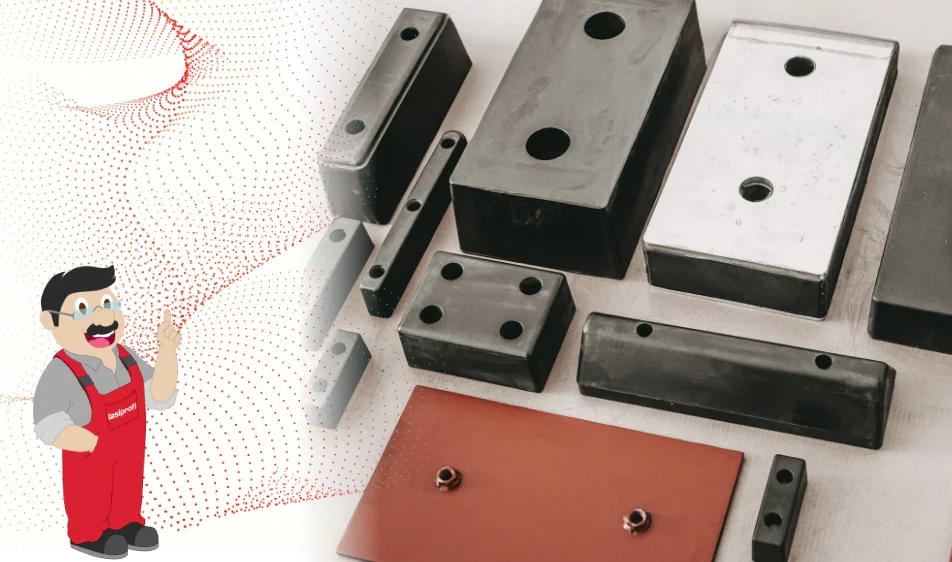
Material properties of rubber buffers for lorries
Rubber buffers and ram buffers are often used on commercial vehicles or as impact protection on ramps, loading bridges and swap bodies. They provide effective impact protection and thus protect lorries, swap bodies and buildings.
Rubber buffers are subject to heavy use and constant wear and tear. However, it is particularly important that wear parts are easy to replace, inexpensive and therefore economical. Despite these advantages, rubber buffers must deliver what they promise. Rubber buffers for lorries are expected to be not only shock-absorbing but also extremely robust. In order to meet these expectations, certain material properties are essential for unconditional use. High-quality rubber buffers have a service life that cheap products cannot match. Cheap materials have to be replaced more often, which in turn incurs installation costs.
Quality and differences between rubber buffers: materials, properties and risks
High-quality buffers are made of new rubber or vulcanised secondary rubber. These natural rubber vulcanisates in particular are characterised by extremely high elasticity and tear resistance. These buffers also have high notch toughness and good abrasion resistance. In terms of its other properties, natural rubber is unstable when exposed to polar liquids and aliphatic, aromatic and chlorinated hydrocarbons. Natural rubber vulcanisates have the highest mechanical and dynamic load-bearing capacity of all so-called elastomers. In contrast, synthetic rubber is based on oil and natural gas. While synthetic rubber used to be a substitute for natural rubber, it has now increasingly found its own areas of application. Rubber itself is a mixture of a wide variety of substances. It is only through a special formula containing several hundred substances that it acquires its various properties in terms of durability and mechanical characteristics. Rubber is a macromolecular material and represents the elastic component of rubber. It determines mechanical properties such as elongation at break, strength and tear resistance, as well as rebound elasticity. The final mixture of chemicals and additives with the rubber, as well as the vulcanisation process, ultimately creates a usable material. The rubber buffers themselves are attached to galvanised or primed screw-on plates or weld-on plates. However, in addition to truly high-quality materials, there are also a large number of cheaper buffers of inferior quality. Such buffers are filled with sand, for example. Elongation and tensile strength cannot be measured. They are characterised by extremely high abrasion and a short service life. Rubber buffers with a new rubber outer skin are also inferior. On the inside, they consist of recycled rubber from old tyre granulate. The new rubber outer skin is quickly damaged under load and detaches from the granulated rubber on the inside. Added to these examples are rubber buffers that have an extremely low rubber content but a high proportion of plastic waste. Elongation and tensile strength are also no longer measurable in these buffers. As a result, the buffer can no longer cushion the forces acting on it. As a result, the kinetic energy is transferred to the building, which is damaged as a result. With rubber buffers for lorries, it is therefore important to pay close attention to the materials the buffer is made of so that the lorry, ramp and building are protected and not damaged.
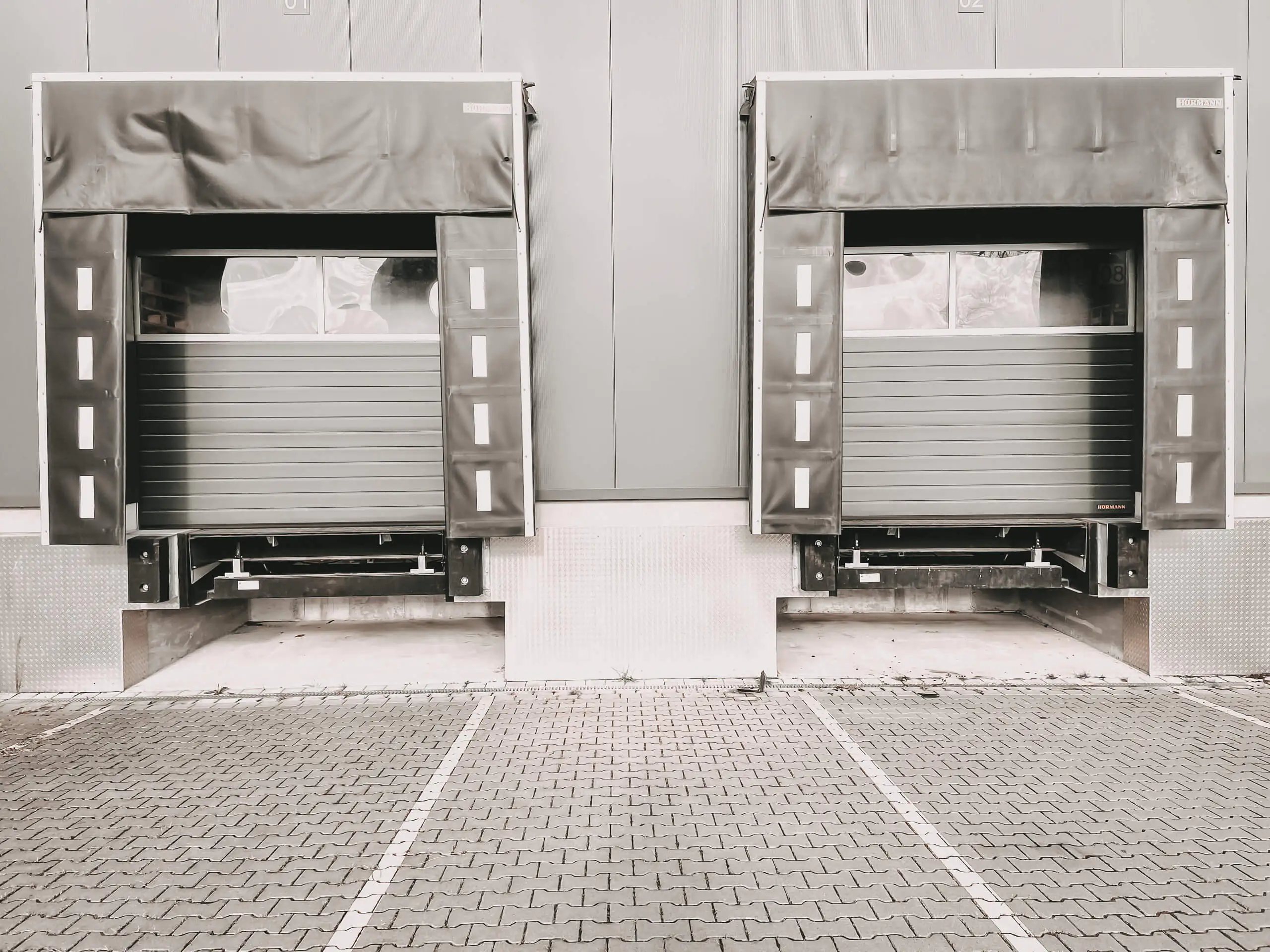
Ramp buffers and their areas of application
Everyone knows what they need on a daily basis and exactly where to get it. But no one thinks about how these items or foodstuffs that we all need actually get to the place where the end consumer then makes their purchase. This is, of course, done by the transport company and usually takes place on the road. When you look at the large, heavy lorries, you often wonder how they can drive up to a loading bay without damaging anything. This is where so-called ram buffers come into play. Ramp buffers are blocks made of new rubber or secondary rubber that are designed to cushion certain forces. They are mainly used in almost all areas of transport and warehousing. Almost all lorries are equipped with ramp buffers so that they can be safely driven onto a ramp without immediately damaging the vehicle. Such ram buffers are also installed at loading ramps. However, these are not only used to cushion the vehicle as it approaches. During the loading or unloading process on a ramp, the vehicle is repeatedly moved up and down due to the loads. Under normal circumstances, this would cause the vehicle to "scrape" against the wall. However, the use of ramps prevents the vehicle from coming into direct contact with the wall. Ideally, the buffer causes the vehicle to bounce back slightly, creating a small gap. However, ram buffers are not only used here. Many transport companies are increasingly using swap bodies. These can be left at the customer's premises for loading and unloading, and the vehicle can continue to be used with other swap bodies. The use of such swap bodies is becoming increasingly important, particularly in groupage transport. They are often parked in a specific place and later picked up by special vehicles and taken to the ramp. Ramming buffers attached to the swap bodies protect the body and, above all, prevent damage to the technology used to open and close the loading area. By and large, it is fair to say that a ram buffer lives up to its name. It is used to cushion (buffer) a collision (ramming at the ramp). However, the ram buffer also helps drivers maintain the correct distance from the wall when they need to pull up to a loading ramp. When the vehicle hits the ram buffer, it should bounce back a little to create the space needed for the vehicle to move during loading or unloading.
