
 Ladungssicherung


 Industrie & Logistik


 Planen & Netze


 Urlaub & Freizeit


Edge protection material
Lesezeit: 6 minutes
Aktualisiert am: 17.09.2024
-
For protecting and stabilising packaging
-
Available in various materials and designs
Fachtexte von
Ladungssicherungs-Profis
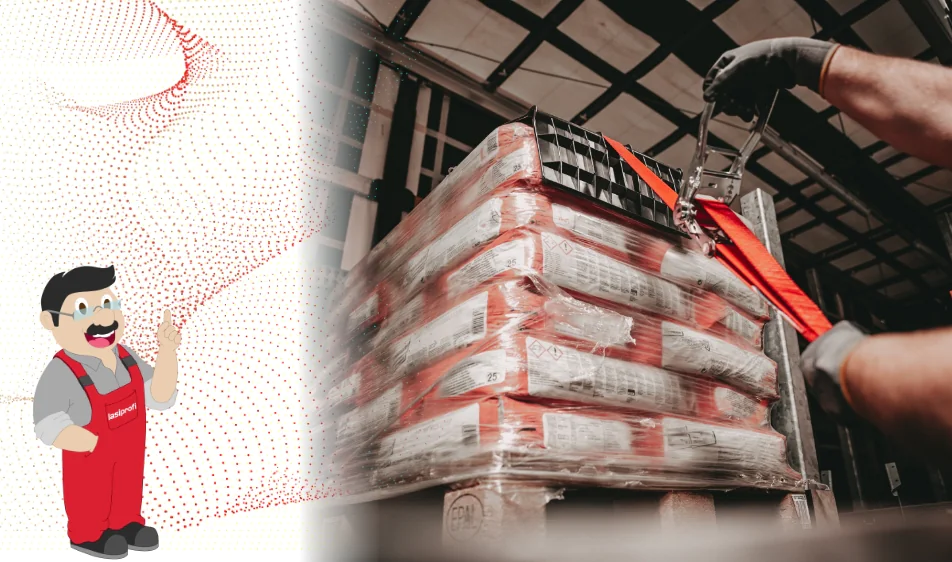
The different materials used for edge protection angles and their advantages and disadvantages
Edge protection in logistics: In logistics, edge protection is used to protect, stabilise, reinforce and stack packaging. Edge protection is primarily a means of protecting objects.
The object is the goods to be transported. Here, the respective transport goods must be protected from damage and transport or storage must be facilitated. Edge protection in logistics is therefore a quality assurance measure and a work aid for the transporter. In logistics, edge protection is often only used for a short period of time. Break resistance and dimensional stability are important during transport. The respective edge protection should securely protect the goods to be transported and simplify transport. Sensitive edges and corners are protected, especially when loading equipment such as chains, ropes, hooks or similar are used for transport. Edge protection is used as an aid when storing the goods during transport, but also in warehouses until the goods are used. The shapes of the respective edge protectors are designed so that several goods can be stacked or stored for long periods of time.
Various parameters are decisive when choosing the respective material for edge protection, for example:
- The weight of the goods being transported (large; heavy; small; light)
- The type of transport (with or without slings)
- The shape of the respective packaging (straight edges)
- The area of application (indoor/outdoor)
- Frequency of use (once; multiple times)
Another important factor in the decision is the price of the edge protection. The manufacturing costs and material costs are decisive for the price. The respective area of application is also taken into account, whereby it is crucial whether the edge protection is exposed to the weather or not. The following materials are generally used for edge protection. Here is an overview of the advantages and disadvantages:
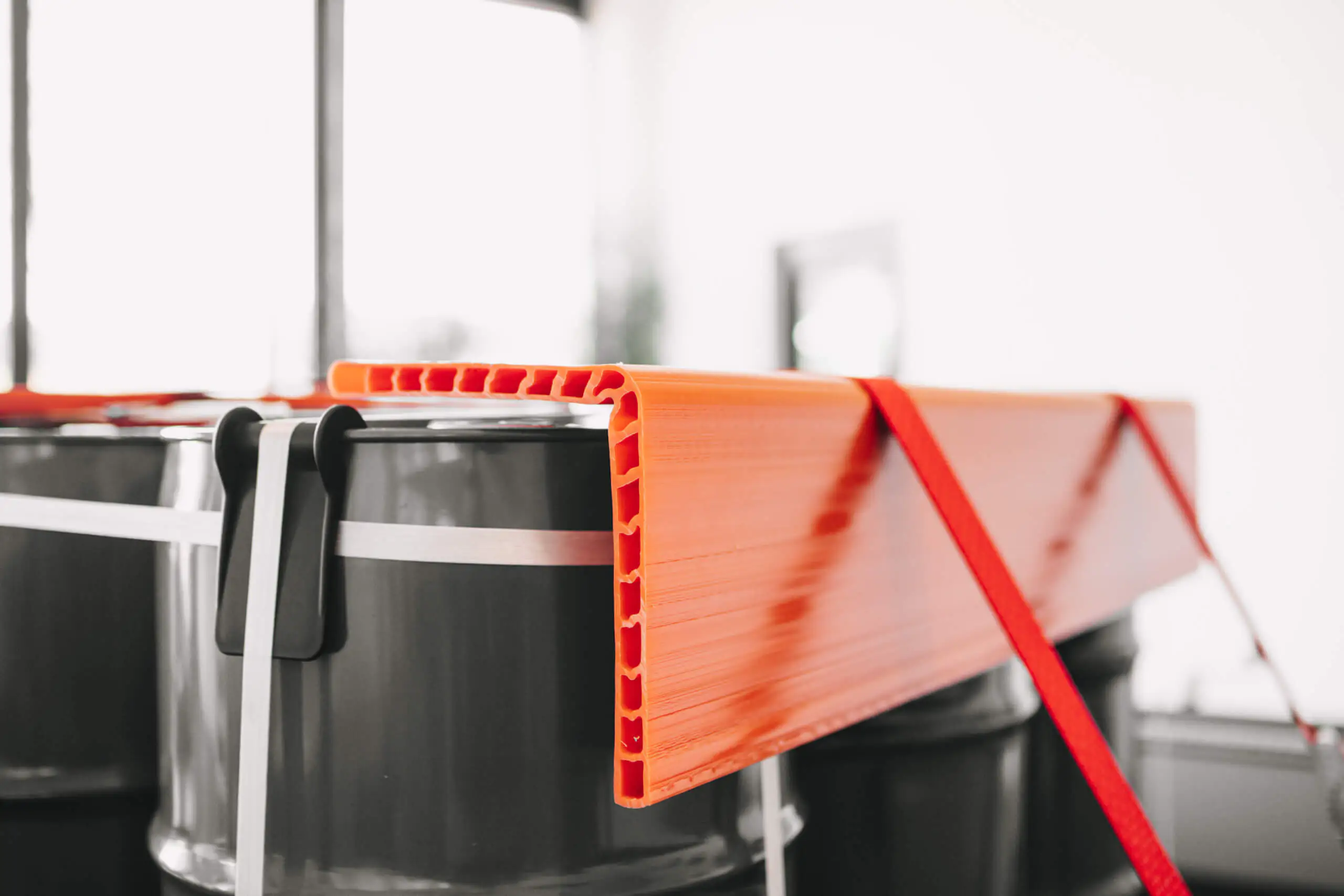
Edge protection brackets made of metal or aluminium
Advantage:
- High strength and stability as well as break resistance
- Under load, the material would first deform rather than break, thus providing additional protection for the transported goods.
- Can be used multiple times and is weather-resistant
- Flexible use when transporting standardised types of goods
Disadvantage:
- Heavy weight High price of the material.
Cardboard edge protection corner
Advantage:
- Inexpensive to manufacture and therefore also inexpensive to purchase
- Easy disposal after use
Disadvantage:
- Only suitable for light weights.
- Offers less protection; the material is not very strong.
- Susceptible to weather conditions, therefore hardly suitable for outdoor use
Edge protection angles and their material properties
Whenever something needs to be transported by road, the issue of load securing comes up. How do you secure the load properly and what equipment do you need to do so? In many cases, anti-slip mats and lashing straps are used. You can find more information on this in our guide.
But what happens if the goods to be secured do not offer a suitable surface for the use of lashing straps? This is where another inconspicuous helper comes into play: the edge protection angle. These angles are available in various sizes and made from different materials. Of course, not every material is suitable for every type of goods, so it is important to find out about the nature of the load as well as the material properties of the edge protector you want to use. Furthermore, you need to be clear about the function of the edge protector. Is it being used to secure the load or to protect against injury?
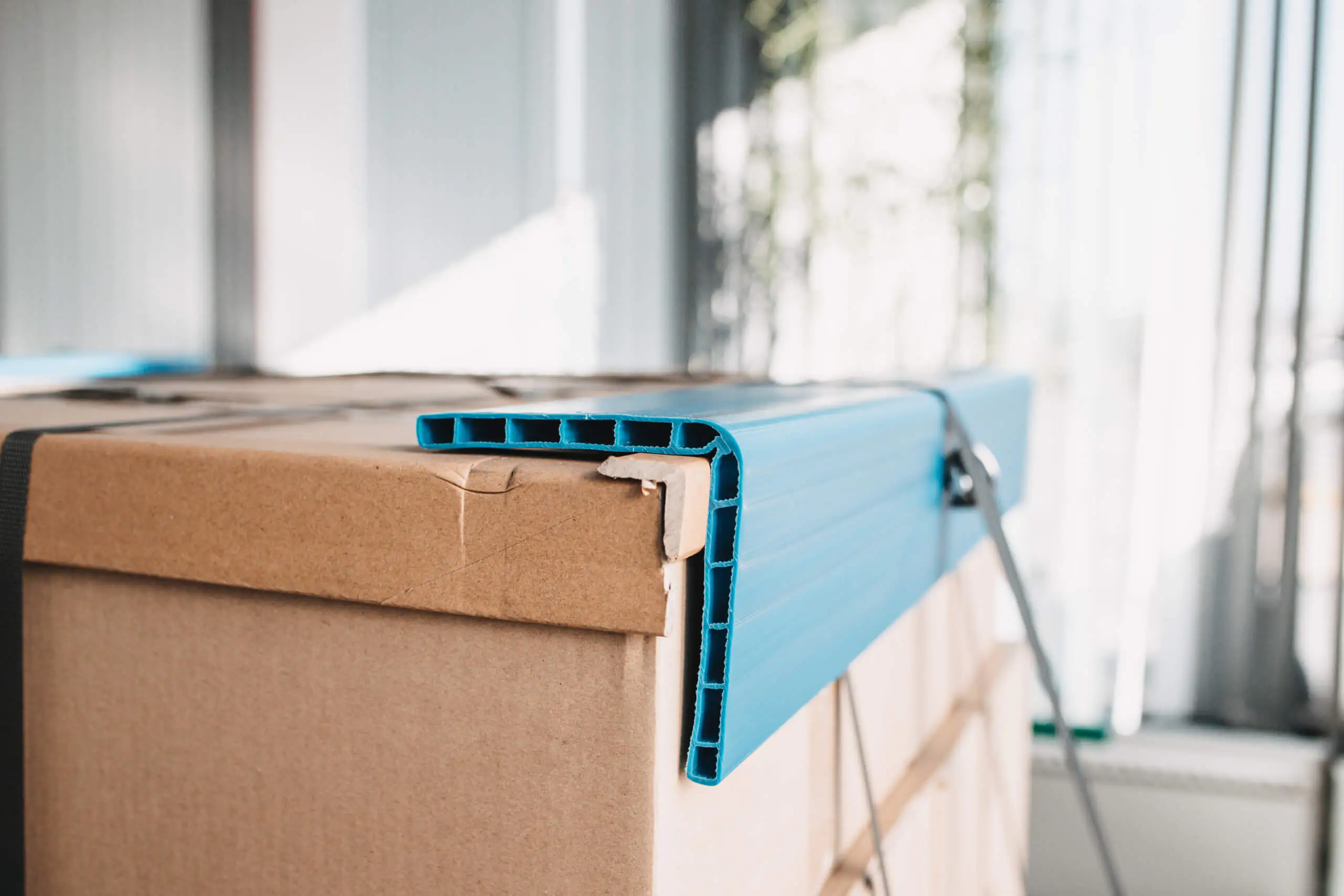
Material variety for edge protection corners
Nowadays, the most commonly used corner protectors are made of robust plastic. However, there are also corner protectors made of metal and even cardboard. The latter are particularly common in the paper industry. When packing a pallet with corrugated cardboard, for example, it is secured to the pallet with strapping. To prevent damage to the corrugated cardboard, cardboard corner protectors are usually used to keep the strapping away from the goods. Plastic corner protectors can then be used to secure the entire pallet to the loading area with a lashing strap, providing the lashing strap with the necessary contact surface to effectively secure the load. However, cardboard corner protectors could also be used to secure such goods. It should be noted, however, that these form a smooth and slippery surface, which often does not provide sufficient grip for the lashing straps. In contrast, most plastic corners have a guide for the lashing strap to prevent it from slipping sideways. Metal corners are used when packing sheet metal and other sharp-edged goods for shipping. These offer the greatest resistance to sharp edges and thus provide good protection against injury for those handling the load. However, for load securing, a plastic corner protector should be used in conjunction with a lashing strap. However, corners with an anti-slip coating on their underside should be used for this purpose. Such protective corners are also available in metal, but for cost reasons they are not used as frequently as plastic protective corners. Anyone who opts for effective load securing should definitely use plastic corner protectors as well as metal ones.
