 Ladungssicherung


 Industrie & Logistik


 Planen & Netze


 Urlaub & Freizeit


Direct lashing
Lesezeit: 6 minutes
Aktualisiert am: 05.10.2025
Fachtexte von
Ladungssicherungs-Profis
Direct lashing: sloping lashing, diagonal lashing, head lashing and bay lashing
There are two basic methods of load securing: lashing down and direct lashing. With lashing down, the load is pressed onto the loading area, while with direct lashing, it is held in place by tensioning straps. This is done using four to eight lashing straps, which are tensioned in a straight line and prevent the load from moving. In contrast to lashing down, direct lashing is a form-fitting load securing method. The tensioning straps replace load beams or end walls and act as load compartment boundaries.
Direct lashing can be divided into different types:
- diagonal lashing
- diagonal lashing
- head lashing
- bay lashing
diagonal lashing
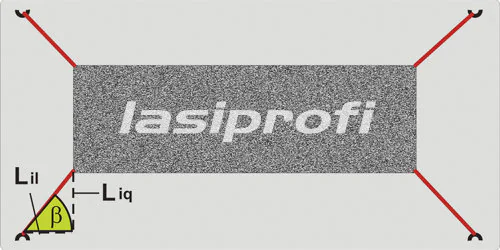
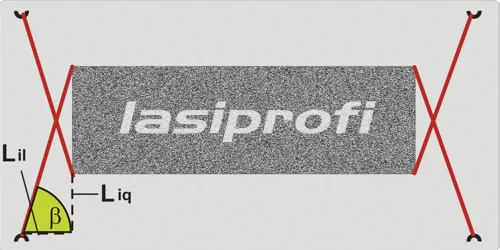
Four lashing straps are always used for diagonal lashing. There are three options:
1. The lashing straps are tensioned from the corners of the load to the nearest corner at the front and rear:
2. The tension straps cross over at the front and back.
3. The tension straps cross over each other on the long sides.
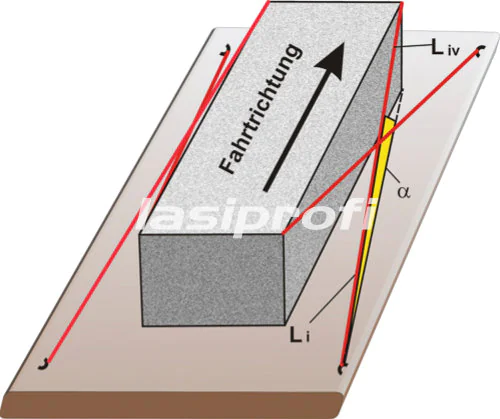
diagonal lashing
When lashing at an angle, at least eight tension belts are tensioned at a right angle (β = 90°) to the loading area.
head lashing
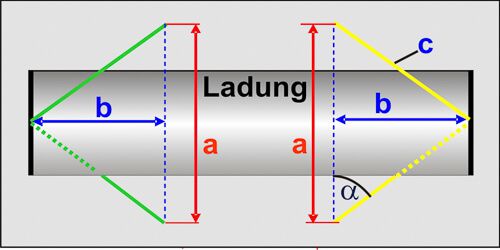
In head lashing, the lashing equipment serves as a ‘headboard substitute’. Head lashing is often used when the load cannot be positioned against the headboard, which may be the case due to the load distribution plan.
head lashing
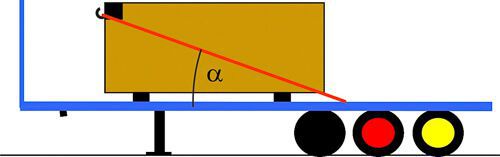
Head flashing with round sling
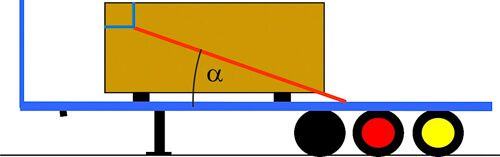
Head flashing with palette
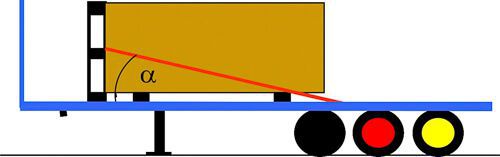
bay lashing
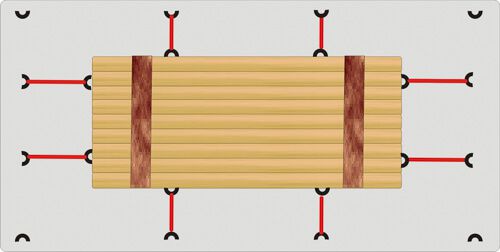
Bay lashing is also known as strapping lashing. The load is secured from both sides using at least two lashing devices. This lashing method is mainly used for lateral securing. The load is not secured at the front or rear. The lashing straps must be laid out on the floor before the loading area is loaded, and the load must not pinch the lashing devices.
Side lashing
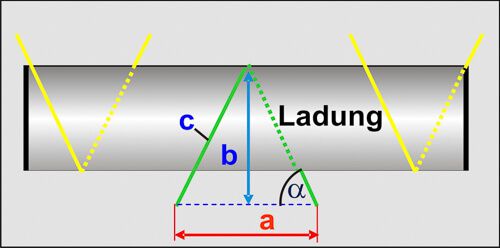
Longitudinal bay lashing