 Ladungssicherung


 Industrie & Logistik


 Planen & Netze


 Urlaub & Freizeit


Definition of lifting equipment and slings
Lesezeit: 4 Minutes
Aktualisiert am: 11.07.2025
-
Definition of lifting equipment and slings
-
Most important standards EN14492 and DGUV
Fachtexte von
Ladungssicherungs-Profis
Standards and regulations for lifting equipment and slings: EN 14492, DGUV and BetrSichV
The most important authorities for defining lifting equipment and slings are the European standard EN 14492 and the regulations of the German Social Accident Insurance (DGUV). These regulations are binding for all members of the professional associations and are therefore legally binding. The Ministry of Justice and Consumer Protection's Industrial Safety Regulation (BetrSichV) also applies to the operation and testing of lifting equipment. The following chapter defines all technical equipment referred to as lifting equipment. The second chapter provides a definition of slings and a list of different types and the associated regulations.
European standards and DGUV regulations
According to European standard EN 14492, cranes are machines for the cyclical lifting and moving of loads suspended from hooks or other load-bearing devices. Winches also fulfil this definition. DGUV Regulation 52 defines the proper installation and handling of cranes, and Regulation 54 defines the same for winches, lifting and pulling devices. Regulation 52 defines cranes as lifting devices that lift loads using a load-bearing means and can be moved in one or more directions. The regulation applies to the following types of cranes:
- rail trolley,
- jib crane,
- overhead travelling crane,
- gantry crane,
- Swing arm crane or column swing crane,
- Truck loading crane,
- Truck-mounted crane,
- Long timber loading crane,
- Storage and retrieval cranes.
The following lifting equipment is excluded and forms part of other DGUV regulations:
- those that are an integral part of machinery and serve only to feed it,
- Cranes on seagoing vessels,
- Swivel arm lifts on construction sites and
- Double frame support lifts on construction sites.
It also contains regulations on the properties of individual crane types and supporting structures, as well as equipment parts. Chapters 2 to 7 of Regulation 52 describe the technical requirements for system components, safety regulations, the duties of operating and maintenance personnel, and exemptions.
Winches, lifting and pulling devices
DGUV Regulation 54 defines winches, lifting and pulling devices as lifting equipment that is used alone or in conjunction with other equipment for lifting, lowering, pulling or pushing loads or for tensioning, as well as for lifting and lowering persons. The following devices are considered to be such equipment:
- drum winches,
- Rope and chain hoists (pulley blocks),
- Multi-purpose hoists with rope or chain,
- Electric and pneumatic hoists with chain, rope or belt,
- Drive disc devices,
- Winches for passenger lifting devices,
- Winches on watercraft,
- Spille,
- Screw jacks, rack and pinion jacks, etc.
- Car jacks and manoeuvring jacks,
- pneumatic and hydraulic piston devices,
- Lifting devices for tipper bodies on vehicles,
- Lifting devices on vehicle attachments.
Please note the areas of application of individual paragraphs for specific types of winches, associated accident prevention regulations, and equipment and facilities that are not covered by this regulation. Annex 1 to Section 6(1) of the statutory Industrial Safety Regulation contains ‘Special provisions for the use of work equipment for lifting loads’. Annex 3 to Section 14(4) of the statutory Industrial Safety Regulation contains inspection provisions, inspection intervals and inspection responsibilities for cranes.
Definition of lifting equipment and slings
DGUV Rule 100-500 (BGR 500) ‘Operation of load-bearing equipment in lifting operations’ defines load-bearing equipment, slings and lifting gear as load-bearing equipment. Slinging equipment refers to devices that are not part of the hoisting equipment and, in terms of their function, establish a connection between the load-bearing equipment and the load or between the load-bearing equipment and the load-bearing device. Load-bearing equipment is defined as devices that are permanently connected to the hoisting equipment, such as crane hooks, grabs or tongs.
The following slings are used as load-bearing equipment:
- Endless ropes (grommets),
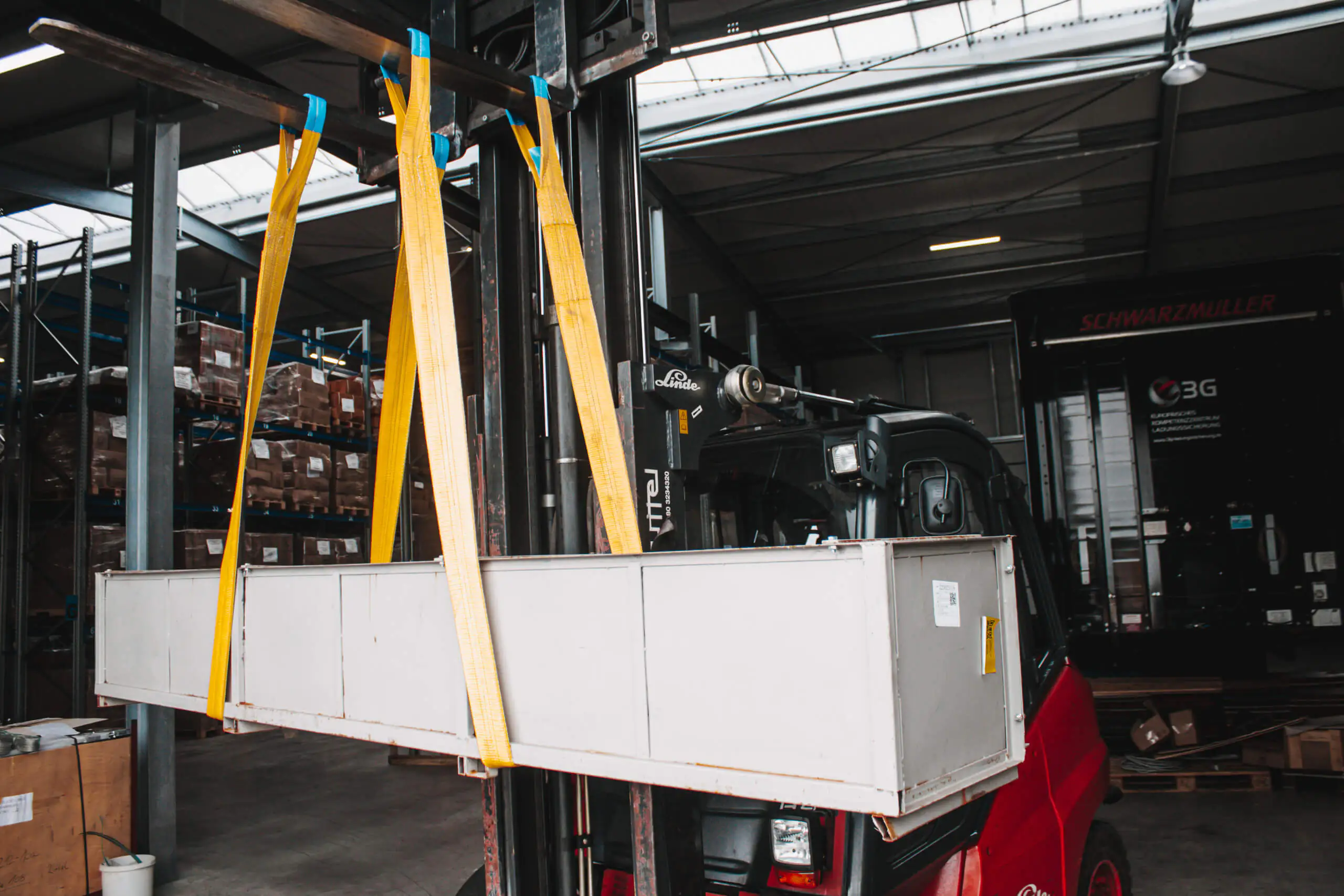
- Lifting straps,
- Chains,
- Eye ropes,
- Round slings,
- rope sling,
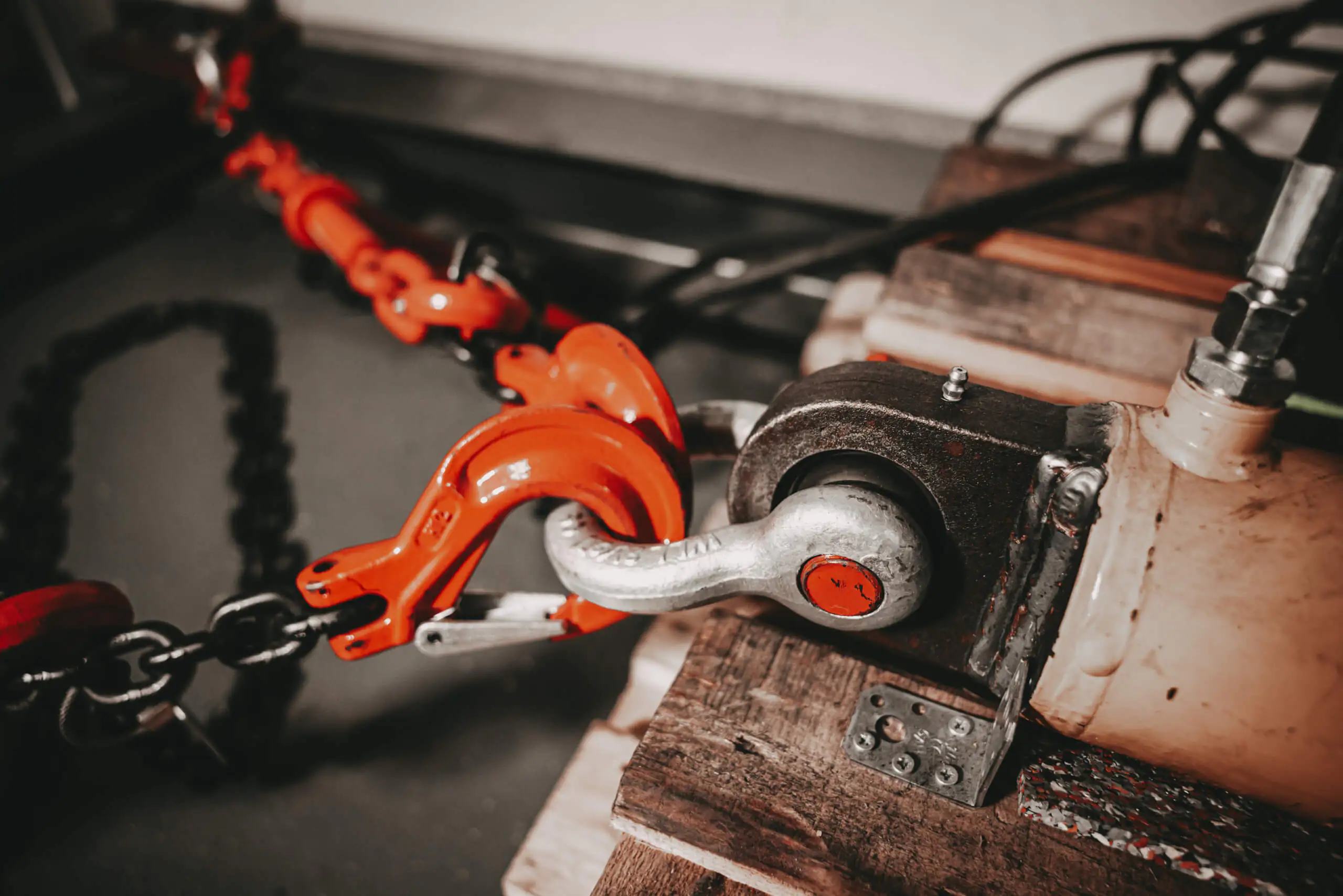
- detachable connecting parts such as shackles
In addition to these regulations, there are European standards for slings. In the case of lifting straps and round slings, this is EN standard 1492-2. This standard precisely defines the material properties they must have and how they must be marked with regard to their use. Shackles as connecting elements of lifting gear or load-bearing equipment are subject to the Machinery Directive 2006/42/EC.